Our approach: putting the Es into education.
Children learn with their bodies before words, and beyond them. Talking does not replace the body’s way of knowing; it builds on top of it. Our approach has five Es.
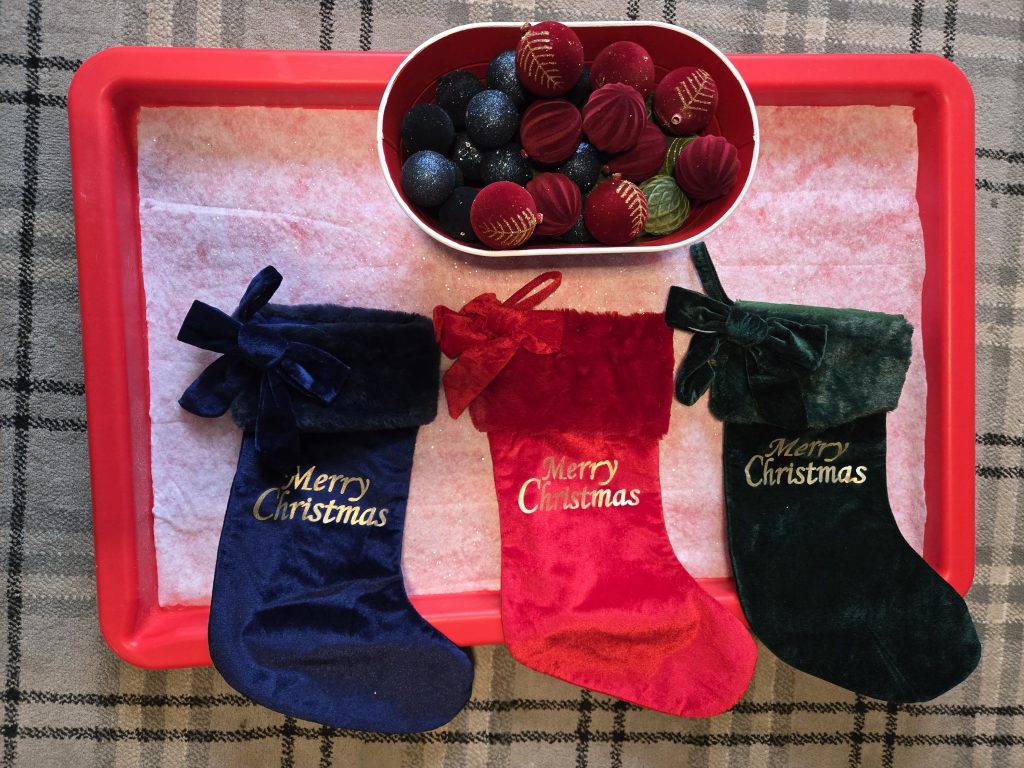
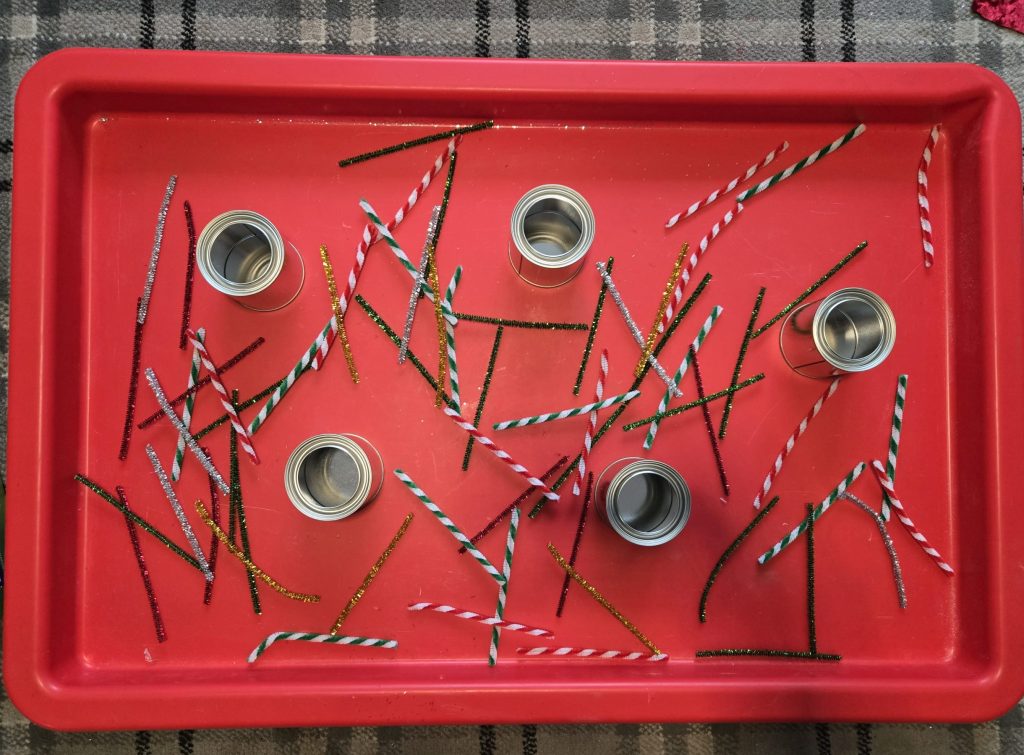
Embodied. Children learn with their bodies, before words and beyond them. They notice in and out, up and down, same and different, through moving and doing. These patterns are called image schemas. From these body patterns, bigger ideas grow. For example, children spend years putting things into containers and taking them out. Later, they understand that a group of things that belong together works like a container too. Things that are the same go inside it. This is called a primary metaphor.
Enactive. Children make sense of the world by doing. Meaning grows out of action, not out of being told. And they do not do this alone: children and adults make sense together, sharing looks, sounds and actions, and meaning grows between them.
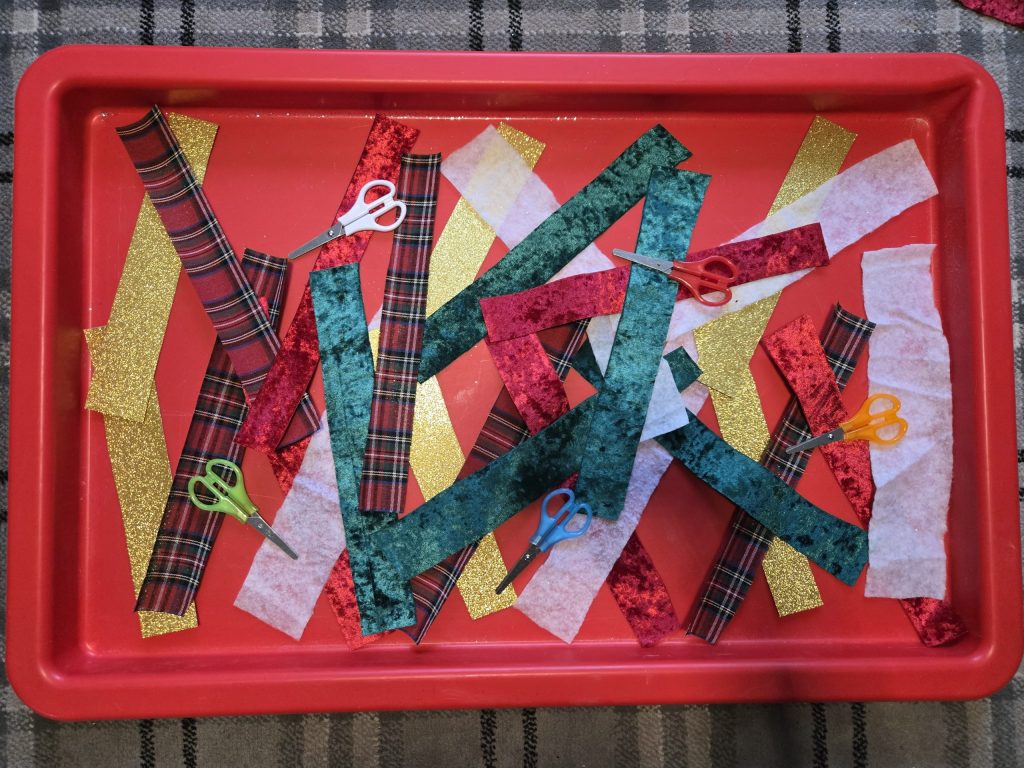
Embedded. Children do not act in empty space. Everything around them offers possibilities for action. A tin says ‘post something in me’. A ribbon says ‘cut me’. We plan the environment carefully so it offers the right possibilities.
Extended. When a child picks up a tool, the tool becomes part of what they can do. Scissors in the hand are not a thing beside the child; they are like new fingers that can cut.
Enculturating. Children are not just learning skills; they are learning how to be part of preschool life. How we greet each other, how we share space, how we care for our things and for each other. We welcome children into this culture, and they help shape it too.
So when children sort, post, cut and build, they are not just playing. They are building the ideas that reading, maths and science will stand on later.
What you will find here.
In this blog we will post the activities we have planned for each term. You will see photos of the trays and read what the children can learn through each one.
The activities repeat throughout the half-term. This is on purpose. Children need repeated opportunities to deeply engage with their environment and each other. A schema is not explored in one morning; it deepens over days and weeks, as the child returns to it and takes it further. So if the same tray appears again and again, that is the learning working exactly as it should.
Activity 1: